2016. május 17., kedd

Shorts: Today's stupid idea

A stupid idea:

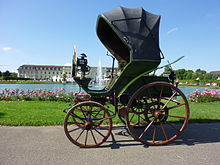
Not all decisions are perfect. Sometimes we pick a route and later face palm ourselves over how insanely ridiculous was the choice we made earlier. We go out in the world, and then the lightbulb turns on inside our heads, but little do we know that it was the wrong lightbulb. Let this picture be the representation of that feeling we get when the deed is done, and instead of a medal, we leave with shame and dishonor…

We do believe that at some point the fella who is behind all this is trying to change the world, thus we think it is an appropriate post on our blog.


Source:


Shorts: E-learning

These days with the internet we are now able to gain much more information then we used to. We can use our computer to play games, surf the net, but the best thing about it is how it helps us studying.
Of course I’m not really talking about Wikipedia, but rather the useful tutorials for basically EVERYTHING. Here is a world changing idea for you, why not pack your whole high school knowledge, and put it in one youtube channel, so you can have visual demonstration, and there is a narrator, who presents one class worth of material in just a 10 minute video every week.
Well this is what one of my favorite youtube channel does, called CrashCourse. I do suggest you check it out. From philosophy through history, all the way to chemistry and astronomy you can find various subject lines which can help you prepare for a final test, and it is the easiest way of learning.


2016. május 16., hétfő

Some interesting ideas that would change our world

Someday we'll look back on the 20th century and wonder why we owned so much stuff. Not that it wasn't great at first. After thousands of years during which most human beings lived hand to mouth, in the 20th century the industrial economies of the West and eventually much of the rest of the world began churning out consumer goods — refrigerators, cars, TVs, telephones, computers. George W. Bush won re-election as President in 2004 in part by proclaiming an "ownership society": "The more ownership there is in America, the more vitality there is in America."
Even as Bush was announcing its birth though, the ownership society was rotting from the inside out. Its demise began with Napster. The digitalization of music and the ability to share it made owning CDs superfluous. Then Napsterization spread to nearly all other media, and by 2008 the financial architecture that had been built to support all that ownership — the subprime mortgages and the credit-default swaps — had collapsed on top of us. Ownership hadn't made the U.S. vital; it had just about ruined the country.
There is a chance, and maybe even a good one, that you'll walk into work one Monday morning and find out your job is being moved to China or India. Millions have already seen that happen, from shop-floor machinists to IT specialists, in places as disparate as Italy, the U.S. and South Korea. China is a manufacturing machine, charging into the global market for everything from cars to solar panels. India's highly trained engineers are outdueling Stanford grads for jobs in R&D, software development and other sectors that are supposed to be the West's economic salvation. The harsh realities of the globalization of labor have left much of the world's workforce feeling despondent. Everyone in places like London and Los Angeles is competing with smart applicants from Bangalore or Shanghai who are willing to work long hours for a
pittance. When there are 2.5 billion people in those two Asian giants combined, how can anyone's job be safe?
Yet there's another way of looking at the great shift of economic power to the East, one that is much less scary and perhaps even inspiring. Those 2.5 billion people are getting richer by the day. This presents an unprecedented opportunity for the workers of the world.
Youth. Antisocial, mobile-tapping, Lady Gaga–obsessed layabouts who get off the couch only to riot. What's to like? Rather a lot. In the Middle East and North Africa, youths played a major role in bringing down some long-standing dictatorships. And that may be only the start. A burgeoning young population might help speed global economic growth and be a sign of positive developments in the quality of life worldwide.
Around the world, countries are in various stages of progress through what economists call the demographic transition. That's the move from high rates of fertility and mortality — women having lots of children, many of whom die young — to low birthrates and longer life expectancies. The rich countries of Europe and North America, along with Japan, are all the way through this transition, with many of them seeing shrinking populations as a result. Africa is still in the middle of the change; Latin America and Asia are further ahead.

2016. május 12., csütörtök

The history of the Automobile

17th and 18th centuries
Ferdinand Verbiest, a member of a Jesuit mission in China, built the first steam-powered vehicle around 1672 as a toy for the Chinese Emperor. It was of small enough scale that it could not carry a driver but it was, quite possibly the first working steam-powered vehicle ('auto-mobile').
Cugnot's steam wagon, the second (1771) version
A replica of Richard Trevithick's 1801 road locomotive 'Puffing Devil'
Steam-powered self-propelled vehicles large enough to transport people and cargo were first devised in the late 18th century. Nicolas-Joseph Cugnot demonstrated his fardier à vapeur ("steam dray"), an experimental steam-driven artillery tractor, in 1770 and 1771. As Cugnot's design proved to be impractical, his invention was not developed in his native France. The center of innovation shifted to Great Britain. By 1784, William Murdoch had built a working model of a steam carriage inRedruth. The first automobile patent in the United States was granted to Oliver Evans in 1789, and in 1801 Richard Trevithick was running a full-sized vehicle on the roads in Camborne.
19th century
Many vehicles were in vogue for a time, and over the next decades such innovations as hand brakes, multi-speedtransmissions, and better steering developed. Some were commercially successful in providing mass transit, until a backlash against these large speedy vehicles resulted in the passage of the Locomotive Act (1865), which required many self-propelled vehicles on public roads in the United Kingdom to be preceded by a man on foot waving a red flag and blowing a horn. This effectively halted road auto development in the UK for most of the rest of the 19th century; inventors and engineers shifted their efforts to improvements in railway locomotives. The law was not repealed until 1896, although the need for the red flag was removed in 1878.
Among other efforts, in 1815, a professor at Prague Polytechnic, Josef Bozek, built an oil-fired steam car. Walter Hancock, builder and operator of London steam buses, in 1838 built a four-seat steam phaeton.
In 1867, Canadian jeweller Henry Seth Taylor demonstrated his 4-wheeled "steam buggy" at the Stanstead Fair in Stanstead, Quebec, and again the following year. The basis of the buggy, which he began building in 1865, was a high-wheeled carriage with bracing to support a two-cylinder steam engine mounted on the floor.
What some people define as the first "real" automobile was produced by French Amédée Bollée in 1873, who built self-propelled steam road vehicles to transport groups of passengers.
The American George B. Selden filed for a patent on May 8, 1879. His application included not only the engine but its use in a 4-wheeled car. Selden filed a series of amendments to his application which stretched out the legal process, resulting in a delay of 16 years before the US 549160 was granted on November 5, 1895.
Karl Benz, the inventor of numerous car-related technologies, received a German patent in 1886.
The four-stroke petrol (gasoline) internal combustion engine that constitutes the most prevalent form of modern automotive propulsion is a creation of Nikolaus Otto. The similar four-stroke diesel engine was invented by Rudolf Diesel. The hydrogen fuel cell, one of the technologies hailed as a replacement for gasoline as an energy source for cars, was discovered in principle by Christian Friedrich Schönbein in 1838. The battery electric car owes its beginnings to Ányos Jedlik, one of the inventors of the electric motor, and Gaston Planté, who invented the lead-acid battery in 1859. The first carriage-sized automobile suitable for use on existing wagon roads in the United States was a steam-powered vehicle invented in 1871, by Dr. J.W. Carhart, a minister of the Methodist Episcopal Church, in Racine, Wisconsin  It induced the State of Wisconsin in 1875, to offer a $10,000 award to the first to produce a practical substitute for the use of horses and other animals. They stipulated that the vehicle would have to maintain an average speed of more than five miles per hour over a 200-mile course. The offer led to the first city to city automobile race in the United States, starting on July 16, 1878, in Green Bay, Wisconsin, and ending in Madison, via Appleton, Oshkosh, Waupun, Watertown, Fort Atkinson, and Janesville. While seven vehicles were registered, only two started to compete: the entries from Green Bay and Oshkosh. The vehicle from Green Bay was faster, but broke down before completing the race. The Oshkosh finished the 201 mile course in 33 hours and 27 minutes, and posted an average speed of six miles per hour. In 1879, the legislature awarded half the prize.


20th century
Pre WWII
Steam-powered road vehicles, both cars and wagons, reached the peak of their development in the early 1930s with fast-steaming lightweight boilers and efficient engine designs. Internal combustion engines also developed greatly during WWI, becoming simpler to operate and more reliable. The development of the high-speed diesel engine from 1930 began to replace them for wagons, accelerated by tax changes in the UK making steam wagons uneconomic overnight. Although a few designers continued to advocate steam power, no significant developments in production steam cars took place after Doble in 1931.
Post-WWII
Whether steam cars will ever be reborn in later technological eras remains to be seen. Magazines such as Light Steam Power continued to describe them into the 1980s. The 1950s saw interest in steam-turbine cars powered by small nuclear reactors (this was also true of aircraft), but the dangers inherent in nuclear fission technology soon killed these ideas.

Electric automobiles
German Flocken Elektrowagen of 1888, regarded as the first electric car of the world
In 1828, Ányos Jedlik, a Hungarian who invented an early type of electric motor, created a tiny model car powered by his new motor. In 1834, Vermont blacksmith Thomas Davenport, the inventor of the first American DC electrical motor, installed his motor in a small model car, which he operated on a short circular electrified track. In 1835, Professor Sibrandus Stratingh of Groningen, the Netherlands and his assistant Christopher Becker created a small-scale electrical car, powered by non-rechargeable primary cells. In 1838, Scotsman Robert Davidson built an electric locomotive that attained a speed of 4 miles per hour (6 km/h). In England, a patent was granted in 1840 for the use of rail tracks as conductors ofelectric current, and similar American patents were issued to Lilley and Colten in 1847. Between 1832 and 1839 (the exact year is uncertain) Robert Anderson of Scotland invented the first crude electric carriage, powered by non-rechargeableprimary cells.
The Flocken Elektrowagen of 1888 by German inventor Andreas Flocken is regarded as the first real electric car of the world.
Electric cars enjoyed popularity between the late 19th century and early 20th century, when electricity was among the preferred methods for automobile propulsion, providing a level of comfort and ease of operation that could not be achieved by the gasoline cars of the time. Advances in internal combustion technology, especially the electric starter, soon rendered this advantage moot; the greater range of gasoline cars, quicker refueling times, and growing petroleum infrastructure, along with the mass production of gasoline vehicles by companies such as the Ford Motor Company, which reduced prices of gasoline cars to less than half that of equivalent electric cars, led to a decline in the use of electric propulsion, effectively removing it from important markets such as the United States by the 1930s. However, in recent years, increased concerns over the environmental impact of gasoline cars, higher gasoline prices, improvements in battery technology, and the prospect of peak oil, have brought about renewed interest in electric cars, which are perceived to be more environmentally friendly and cheaper to maintain and run, despite high initial costs, after a failed reappearance in the late-1990s.
References:
Eckermann, Erik (2001). World History of the Automobile. SAE Press. p. 14.ISBN 9780768008005.

Setright, L. J. K. (2004). Drive On!: A Social History of the Motor Car. Granta Books. ISBN 9781862076983.

A History of Wisconsin Highway Development 1835–1945, State Highway Commission of Wisconsin and the Public Roads Administration, Federal Works Agency, 1947, pp. 19–20

"America on the Move; Autocar automobile". Smithsonian Institution – National Museum of American History. Retrieved 2 January 2016.

Sedgwick, Michael; Gillies, Mark (1986). A-Z of Cars 1945–1970. Hamlyn.ISBN 9780600333913.

2016. május 8., vasárnap

The History of Television

In 1897, English physicist J. J. Thomson was able, in his three famous experiments, to deflect cathode rays, a fundamental function of the modern cathode ray tube (CRT). The earliest version of the CRT was invented by the German physicist Ferdinand Braun in 1897 and is also known as the "Braun" tube. It was a cold-cathode diode, a modification of the Crookes tube, with a phosphor-coated screen. In 1907, Russian scientist Boris Rosing used a CRT in the receiving end of an experimental video signal to form a picture. He managed to display simple geometric shapes onto the screen, which marked the first time that CRT technology was used for what is now known as television. In 1908 Alan Archibald Campbell-Swinton, fellow of the Royal Society (UK), published a letter in the scientific journal Nature in which he described how "distant electric vision" could be achieved by using a cathode ray tube, or Braun tube, as both a transmitting and receiving device, He expanded on his vision in a speech given in London in 1911 and reported in The Times and the Journal of the Röntgen Society. In a letter to Nature published in October 1926, Campbell-Swinton also announced the results of some "not very successful experiments" he had conducted with G. M. Minchin and J. C. M. Stanton. They had attempted to generate an electrical signal by projecting an image onto a selenium-coated metal plate that was simultaneously scanned by a cathode ray beam. These experiments were conducted before March 1914, when Minchin died, but they were later repeated by two different teams in 1937, by H. Miller and J. W. Strange from EMI, and by H. Iams and A. Rose from RCA. Both teams succeeded in transmitting "very faint" images with the original Campbell-Swinton's selenium-coated plate. Although others had experimented with using a cathode ray tube as a receiver, the concept of using one as a transmitter was novel. The first cathode ray tube to use a hot cathode was developed by John B. Johnson (who gave his name to the term Johnson noise) and Harry Weiner Weinhart of Western Electric, and became a commercial product in 1922.
In 1926, Hungarian engineer Kálmán Tihanyi designed a television system utilizing fully electronic scanning and display elements and employing the principle of "charge storage" within the scanning (or "camera") tube.The problem of low sensitivity to light resulting in low electrical output from transmitting or "camera" tubes would be solved with the introduction of charge-storage technology by Kálmán Tihanyi beginning in 1924. His solution was a camera tube that accumulated and stored electrical charges ("photoelectrons") within the tube throughout each scanning cycle. The device was first described in a patent application he filed in Hungary in March 1926 for a television system he dubbed "Radioskop". After further refinements included in a 1928 patent application, Tihanyi's patent was declared void in Great Britain in 1930, so he applied for patents in the United States. Although his breakthrough would be incorporated into the design of RCA's "iconoscope" in 1931, the U.S. patent for Tihanyi's transmitting tube would not be granted until May 1939. The patent for his receiving tube had been granted the previous October. Both patents had been purchased by RCA prior to their approval. Charge storage remains a basic principle in the design of imaging devices for television to the present day.
On 25 December 1926, at Hamamatsu Industrial High School in Japan, Japanese inventor Kenjiro Takayanagi demonstrated a TV system with a 40-line resolution that employed a CRT display. This was the first working example of a fully electronic television receiver. Takayanagi did not apply for a patent.
On 7 September 1927, American inventor Philo Farnsworth's image dissector camera tube transmitted its first image, a simple straight line, at his laboratory at 202 Green Street in San Francisco. By 3 September 1928, Farnsworth had developed the system sufficiently to hold a demonstration for the press. This is widely regarded as the first electronic television demonstration. In 1929, the system was improved further by the elimination of a motor generator, so that his television system now had no mechanical parts. That year, Farnsworth transmitted the first live human images with his system, including a three and a half-inch image of his wife Elma ("Pem") with her eyes closed (possibly due to the bright lighting required).
Vladimir Zworykin demonstrates electronic television (1929)
Meanwhile, Vladimir Zworykin was also experimenting with the cathode ray tube to create and show images. While working for Westinghouse Electric in 1923, he began to develop an electronic camera tube. But in a 1925 demonstration, the image was dim, had low contrast, and poor definition, and was stationary. Zworykin's imaging tube never got beyond the laboratory stage. But RCA, which acquired the Westinghouse patent, asserted that the patent for Farnsworth's 1927 image dissector was written so broadly that it would exclude any other electronic imaging device. Thus RCA, on the basis of Zworykin's 1923 patent application, filed a patent interference suit against Farnsworth. The U.S. Patent Office examiner disagreed in a 1935 decision, finding priority of invention for Farnsworth against Zworykin. Farnsworth claimed that Zworykin's 1923 system would be unable to produce an electrical image of the type to challenge his patent. Zworykin received a patent in 1928 for a color transmission version of his 1923 patent application, he also divided his original application in 1931.Zworykin was unable or unwilling to introduce evidence of a working model of his tube that was based on his 1923 patent application. In September 1939, after losing an appeal in the courts, and determined to go forward with the commercial manufacturing of television equipment, RCA agreed to pay Farnsworth US$1 million over a ten-year period, in addition to license payments, to use his patents.
In 1933, RCA introduced an improved camera tube that relied on Tihanyi's charge storage principle. Dubbed the "Iconoscope" by Zworykin, the new tube had a light sensitivity of about 75,000 lux, and thus was claimed to be much more sensitive than Farnsworth's image dissector. However, Farnsworth had overcome his power problems with his Image Dissector through the invention of a completely unique "multipactor" device that he began work on in 1930, and demonstrated in 1931 This small tube could amplify a signal reportedly to the 60th power or better and showed great promise in all fields of electronics. Unfortunately, a problem with the multipactor was that it wore out at an unsatisfactory rate.
At the Berlin Radio Show in August 1931, Manfred von Ardenne gave a public demonstration of a television system using a CRT for both transmission and reception. However, Ardenne had not developed a camera tube, using the CRT instead as a flying-spot scanner to scan slides and film. Philo Farnsworth gave the world's first public demonstration of an all-electronic television system, using a live camera, at the Franklin Institute of Philadelphiaon 25 August 1934, and for ten days afterwards.
Mexican inventor Guillermo González Camarena also played an important role in early TV. His experiments with TV (known as telectroescopía at first) began in 1931 and led to a patent for the "trichromatic field sequential system" color television in 1940.
In Britain the EMI engineering team led by Isaac Shoenberg applied in 1932 for a patent for a new device they dubbed "the Emitron", which formed the heart of the cameras they designed for the BBC. On 2 November 1936, a 405-line broadcasting service employing the Emitron began at studios in Alexandra Palace, and transmitted from a specially built mast atop one of the Victorian building's towers. It alternated for a short time with Baird's mechanical system in adjoining studios, but was more reliable and visibly superior. This was the world's first regular "high-definition" television service.
The original American iconoscope was noisy, had a high ratio of interference to signal, and ultimately gave disappointing results, especially when compared to the high definition mechanical scanning systems then becoming available. The EMI team, under the supervision of Isaac Shoenberg, analyzed how the iconoscope (or Emitron) produces an electronic signal and concluded that its real efficiency was only about 5% of the theoretical maximum.They solved this problem by developing, and patenting in 1934, two new camera tubes dubbed super-Emitron and CPS Emitron. The super-Emitron was between ten and fifteen times more sensitive than the original Emitron and iconoscope tubes and, in some cases, this ratio was considerably greater. It was used foroutside broadcasting by the BBC, for the first time, on Armistice Day 1937, when the general public could watch on a television set as the King laid a wreath at the Cenotaph.This was the first time that anyone had broadcast a live street scene from cameras installed on the roof of neighboring buildings, because neither Farnsworth nor RCA would do the same until the 1939 New York World's Fair.
Ad for the beginning of experimental television broadcasting in New York City by RCA in 1939
Indian-head test pattern used during the black & white era before 1970. It was displayed when a TV station first signed on every day.
On the other hand, in 1934, Zworykin shared some patent rights with the German licensee company Telefunken. The "image iconoscope" ("Superikonoskop" in Germany) was produced as a result of the collaboration. This tube is essentially identical to the super-Emitron. The production and commercialization of the super-Emitron and image iconoscope in Europe were not affected by the patent war between Zworykin and Farnsworth, because Dieckmann and Hell had priority in Germany for the invention of the image dissector, having submitted a patent application for their Lichtelektrische Bildzerlegerröhre für Fernseher (Photoelectric Image Dissector Tube for Television) in Germany in 1925, two years before Farnsworth did the same in the United States. The image iconoscope (Superikonoskop) became the industrial standard for public broadcasting in Europe from 1936 until 1960, when it was replaced by the vidicon and plumbicon tubes. Indeed, it was the representative of the European tradition in electronic tubes competing against the American tradition represented by the image orthicon. The German company Heimann produced the Superikonoskop for the 1936 Berlin Olympic Games, later Heimann also produced and commercialized it from 1940 to 1955; finally the Dutch company Philips produced and commercialized the image iconoscope and multicon from 1952 to 1958.
American television broadcasting, at the time, consisted of a variety of markets in a wide range of sizes, each competing for programming and dominance with separate technology, until deals were made and standards agreed upon in 1941. RCA, for example, used only Iconoscopes in the New York area, but Farnsworth Image Dissectors in Philadelphia and San Francisco. In September 1939, RCA agreed to pay the Farnsworth Television and Radio Corporation royalties over the next ten years for access to Farnsworth's patents. With this historic agreement in place, RCA integrated much of what was best about the Farnsworth Technology into their systems. In 1941, the United States implemented 525-line television.
The world's first 625-line television standard was designed in the Soviet Union in 1944 and became a national standard in 1946. The first broadcast in 625-line standard occurred in Moscow in 1948. The concept of 625 lines per frame was subsequently implemented in the European CCIR standard.
In 1936, Kálmán Tihanyi described the principle of plasma display, the first flat panel display system.

References 
Shiers, George and May (1997), Early Television: A Bibliographic Guide to 1940. Taylor & Francis, pp. 13, 22. ISBN 978-0-8240-7782-2.
Abramson, Albert (1987), The History of Television, 1880 to 1941. Jefferson, NC: Albert Abramson. p. 148.